
When Nothing Is Happening
Growth has long silent phases. Those who understand this have an advantage that others cannot replicate

There is a particular kind of frustration that deserves more attention than it gets. It’s not the frustration of failure. Failure, at least, gives you clarity. You can point out what went wrong. You can make adjustments. You can learn something obvious.
The frustration I’m talking about belongs to people who are doing the right things. They’re putting in the time, the focus, the resources. And nothing is happening. No visible progress. No feedback. No confirmation that any of it is working.
Most people interpret this silence as a signal. They read the absence of visible results as proof that the strategy is broken, or the effort is misallocated, or the whole direction needs to change.
The Architecture of Silent Growth
Growth is not linear or continuous. I think most people know this intellectually, but very few internalize what it actually means in practice.
The way I see it, growth operates in a rough sequence: you develop an initial understanding of something, you repeat it until the mechanics become familiar, the knowledge integrates beneath the level of conscious awareness, and eventually something emerges that other people can see and measure. The first three phases of that sequence are essentially invisible. They’re often invisible even to the person going through them.
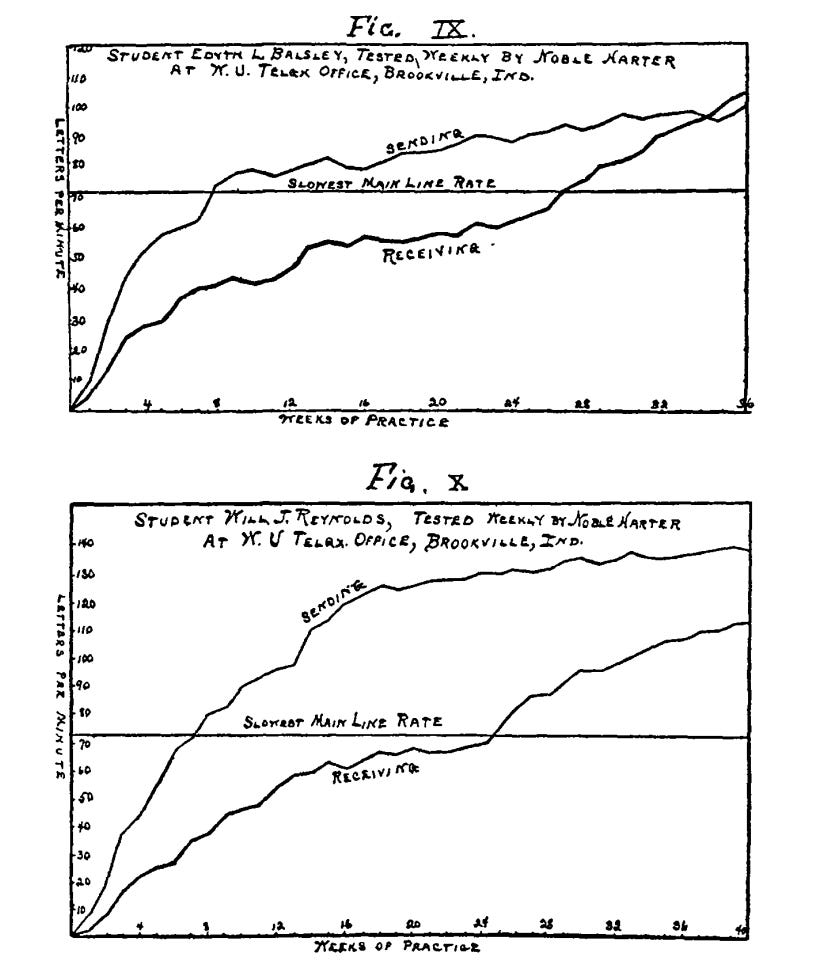
This isn’t just my observation. The research on skill acquisition has documented this pattern for over a century. In 1897, Bryan and Harter studied telegraph operators learning Morse code and found that it generally took two to three years to become proficient, but the progression was not continuous. Operators hit long plateaus during which performance barely changed. The critical finding was that performance could not advance to a higher level until lower-level responses had been automatized within what the researchers called a hierarchy of habits. In other words, the plateau wasn’t a sign that learning had stopped. It was the period during which the system was reorganizing itself to support the next level of capability.
The Tolerance Gap
There is a specific capacity that separates those who compound from those who don’t. I don’t think it’s intelligence. I don’t think it’s discipline, at least not in the way most people understand the word. And it’s not grit, as popularly conceived.
It is the ability to sustain effort during periods of ambiguity, when the evidence neither confirms nor denies that the current path is correct.
Psychologists have studied this capacity under the name “tolerance of ambiguity,” a concept first proposed by Frenkel-Brunswik in the late 1940s and refined considerably since. The research suggests it is a relatively stable individual difference that predicts reactions across a wide variety of life contexts. People with higher ambiguity tolerance tend to show greater resilience, a more internal locus of control, and higher self-efficacy. People with lower ambiguity tolerance tend to seek premature closure, making decisions not because they’ve found the right answer but because the uncertainty itself has become intolerable.
This maps directly onto what I see in practice. The human mind is wired to seek confirmation. When confirmation is absent, the default response is to change direction. But changing direction resets the compounding process. It restarts the silent phase from zero. The cycle looks something like this: effort, then silence, then doubt, then abandonment, then new effort, then silence again, then doubt again, then abandonment again.
This isn’t failure in any conventional sense. It’s premature rotation. And I would bet it is the single most common pattern in careers, skill development, and personal growth.
What Actually Compounds
The things that produce long-term results share a common characteristic: they are difficult to evaluate in the short term.
Judgment improves through exposure, but there is no quarterly report for judgment. Relationships deepen through consistency, but depth is not measurable until it is tested. Knowledge reorganizes itself into understanding, but the transition is gradual and invisible.
The things that are easy to measure in the short term, output volume, visible activity, metrics that move weekly, are often the things that don’t compound at all. They produce linear returns at best. The confusion between what is measurable and what is valuable is one of the most expensive errors a person or an organization can make.
I think the implication here is uncomfortable but precise. The years that feel like nothing may be the only years that actually matter. Not because suffering has inherent value. Not because patience is a virtue in some abstract philosophical sense. But because the architecture of compounding requires a foundation that only time and sustained focus can build. The research on learning plateaus, on U-shaped development, and on the gap between performance and learning all point in the same direction: visible progress is a trailing indicator, not a leading one.
The ones who understand this don’t merely tolerate the silent phases. They protect them.